Humanity. Machines. Uneasy blur.
Killjoys is a zine exploring the uneasy blur between human creativity and machine-made images. It documents my own journey navigating the tension of authorship and responsibility while working with generative AI tools — a critical reflection on what machines actually carry when they create.
Grappling with authorship.
To explore the blur between human creativity and machine output, I spoke with artists about responsibility and the strange emotions tied to working with AI. The zine fragments those conversations — layering texture and theory to document the tension of working inside generative systems.
My method was trial, error, and duality: setting AI output directly against human critique to surface the labour that speed usually hides.
Trial, error, and duality — AI output juxtaposed against human critique to expose hidden work.
Authorship, algorithmic haunting, and the gap between perceived speed and actual craft.
Flip through Killjoys.
Thirteen spreads that fragment artist interviews into texture, theory, and friction. Grab a page and drag it across — or click a side to turn.
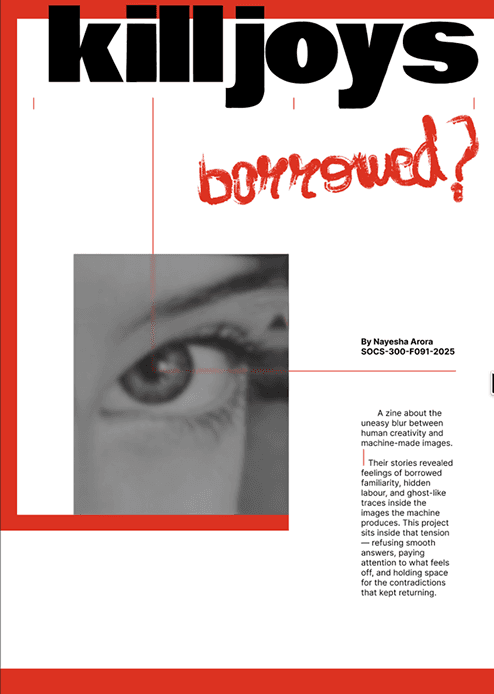
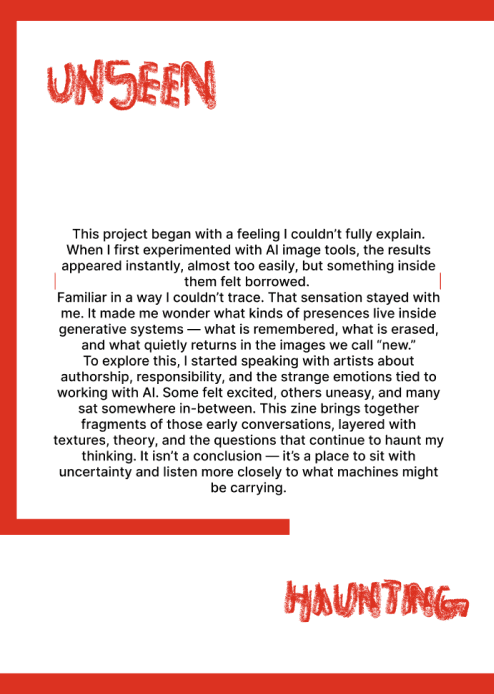
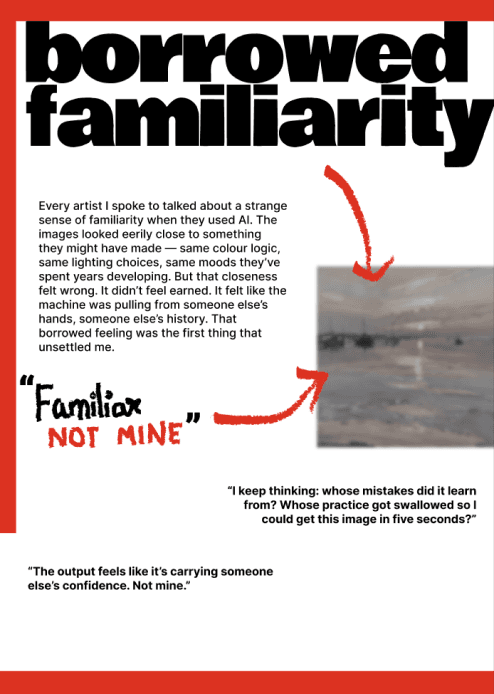
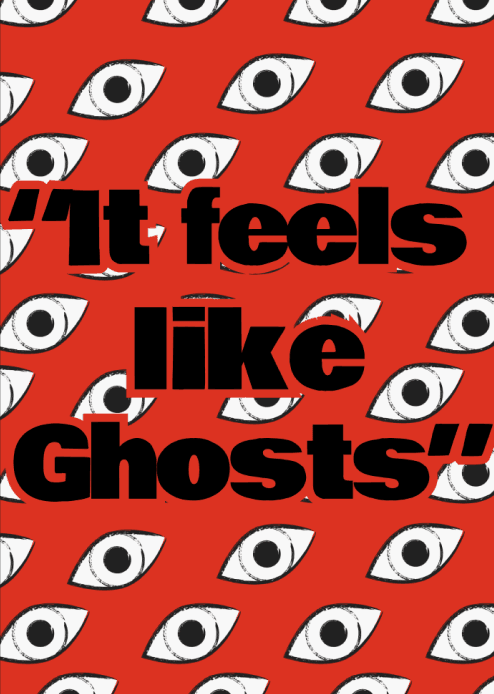
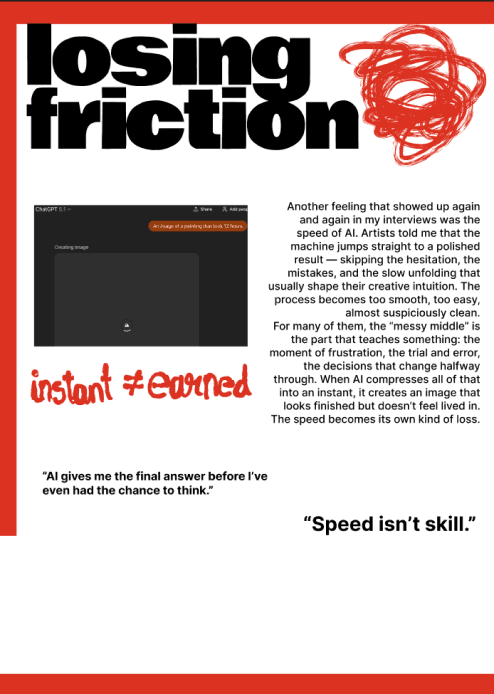
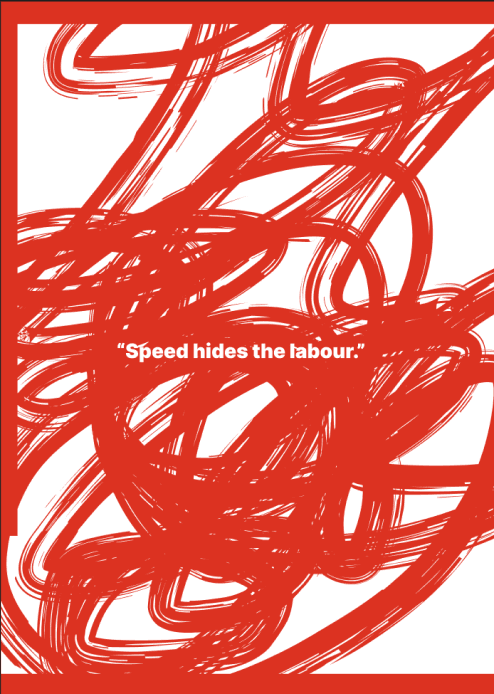
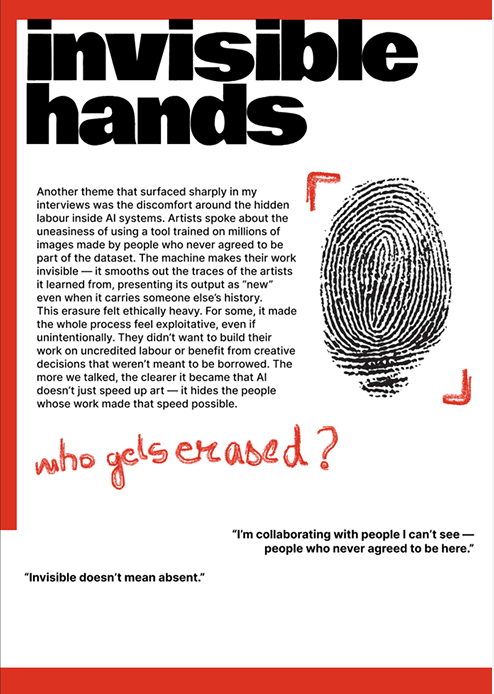
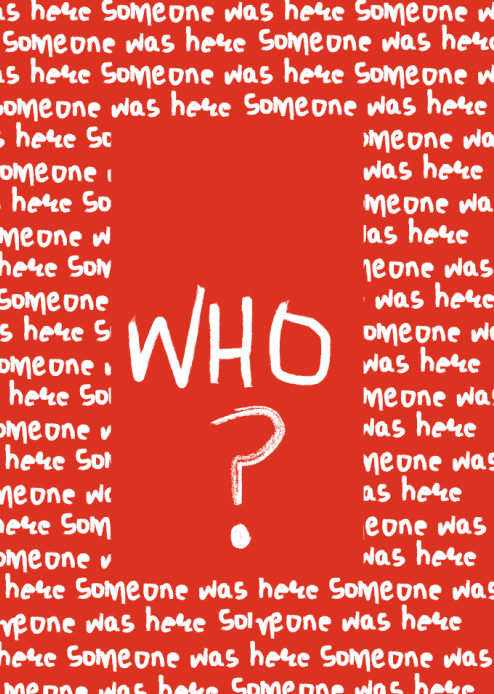
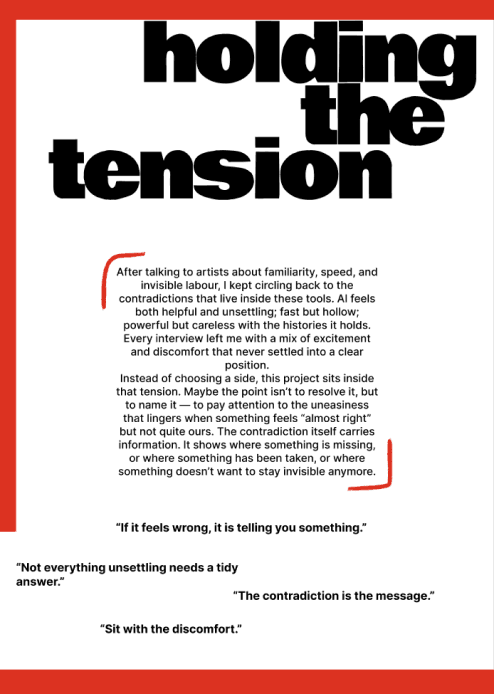
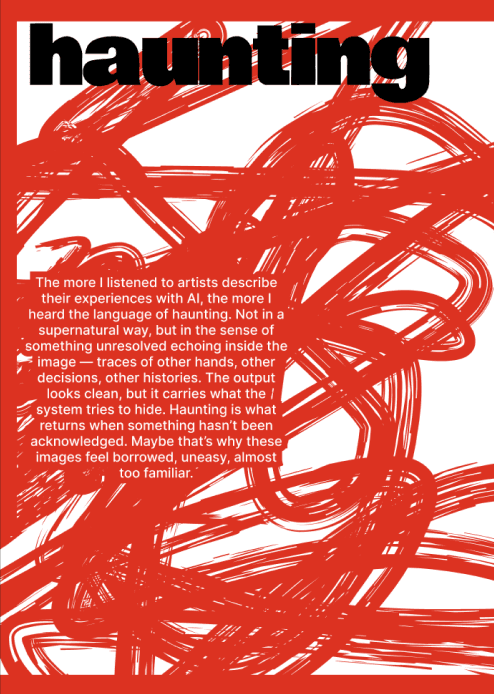
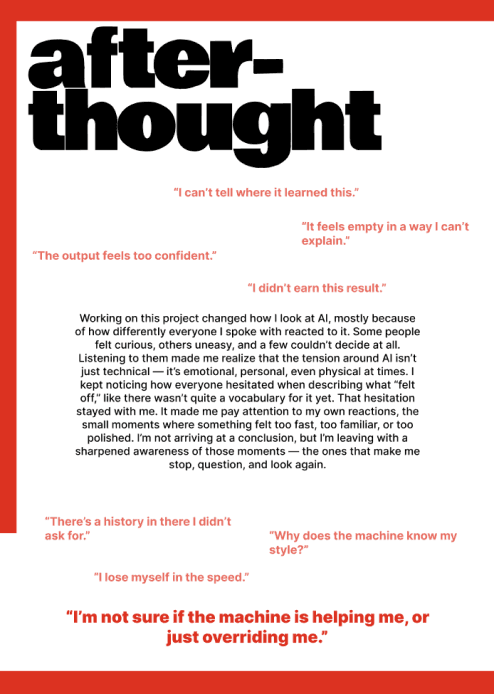
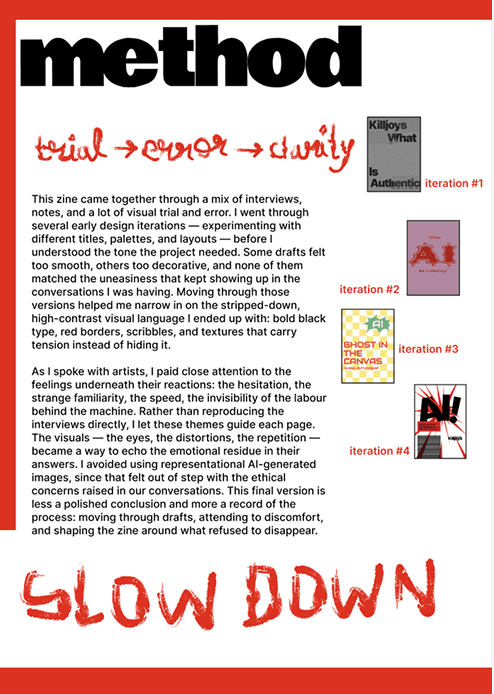
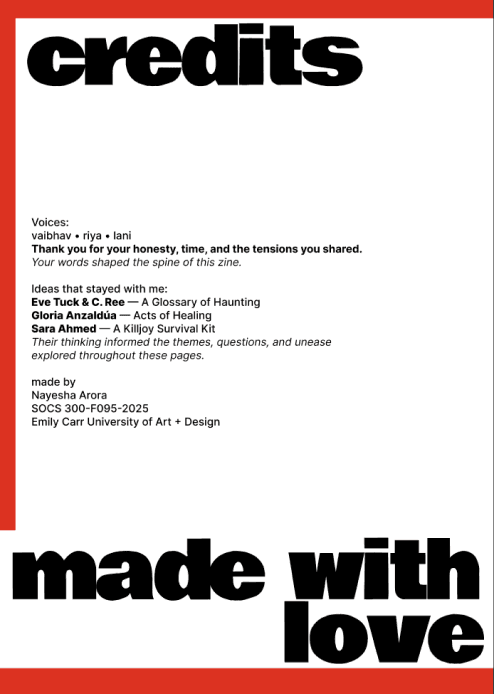
Stripped-down and visceral.
To capture the tension between human craft and machine output, I abandoned decorative design for a stark, high-friction visual language — one built on friction, duality, and sensory residue.
Aggressive red, void black, and off-white build a warning-like atmosphere.
Oversized headlines against fragmented text mirror the cognitive dissonance artists described.
Hand-drawn scribbles over AI output anchor the invisible human labour machines erase.
The Palette
Sequential Scale
A somatic scale: darker reds carry algorithmic intensity and cognitive void, while the signature red anchors human friction and emotional residue. The off-white grounds the dense spreads and prevents visual fatigue.
Sitting with the unease.
Killjoys was a deep dive into the emotional landscape of generative AI, pushing me to confront the tension between speed and authorship. The stark aesthetic wasn't decoration — I learned that the physical constraints of a zine communicate as much as the words on the page.
The hardest part was navigating the hypocrisy of using the exact tools I was critiquing, and choosing to make that contradiction visible rather than hide it. Speed hides the labour — so I used dense layouts and harsh contrast on purpose, to slow the reader down and make them feel it.